
Event Catering Staff in Belfast BT1 — Immediate Start with Staffing Service
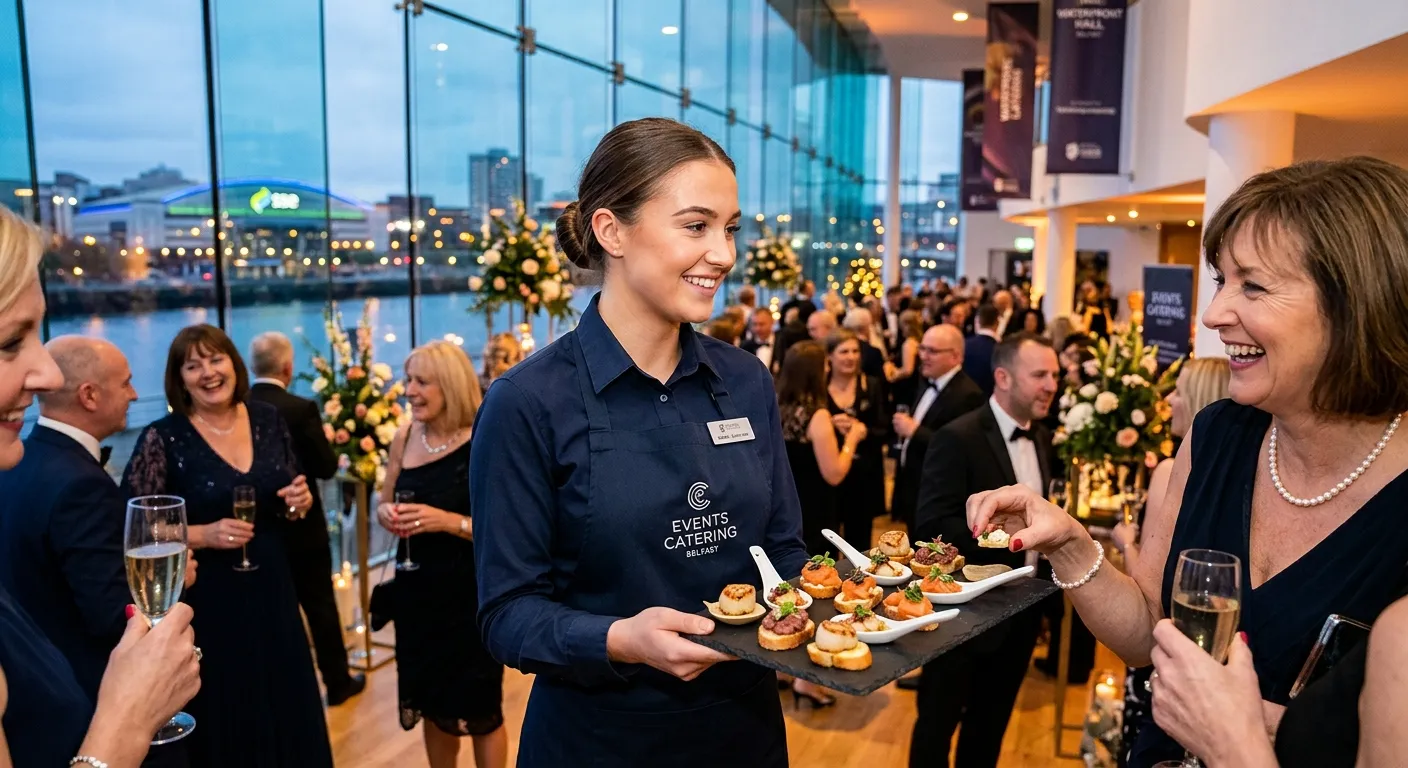
Staffing Service is recruiting an experienced Event Catering Staff for an immediate temporary placement in Belfast BT1. ASAP start, competitive pay, and ongoing work for the right candidate.
|
Location
Belfast BT1
Local & surrounding areas |
Start Date
ASAP Start
Available immediately |
Pay Rate
Competitive
Based on experience |
Duration
Temporary
Temp-to-perm possible |
Job Description
Staffing Service is partnering with prestigious venues and event organisers across Belfast BT1 to recruit dedicated and professional Event Catering Staff. This dynamic role is at the heart of Belfast's thriving event scene, supporting everything from corporate conferences at the ICC Belfast to elegant weddings and high-profile product launches. We are looking for individuals who thrive in fast-paced environments and are passionate about delivering exceptional service. As a leading specialist in Event Staff Hire, we understand the unique demands of the hospitality sector and are committed to placing you with reputable employers who value your skills.
This position offers an immediate start and is perfect for those seeking flexible work, a foot in the door of the events industry, or a reliable temporary income. Unlike generic job boards, Staffing Service provides a personal touch. Our consultants, who have deep knowledge of the Belfast BT1 market, will match you with roles that suit your experience and availability, ensuring you are prepared and confident for each assignment. Whether you're a seasoned waiter looking for variety or someone new to catering with a great attitude, we have opportunities for you. For insights into how modern recruitment agencies find the right fit, explore our resource on Candidate Screening Strategies For 2026.
Key Responsibilities
- Providing professional silver service, plate service, or buffet service to guests at various events across Belfast.
- Setting up and breaking down event spaces, including laying tables, arranging chairs, and setting up catering stations.
- Ensuring all food safety and hygiene standards are strictly adhered to, including safe food handling and allergen awareness.
- Assisting with kitchen prep work, such as plating meals, garnishing dishes, and preparing beverages under chef direction.
- Maintaining a clean, tidy, and safe working environment in both front-of-house and back-of-house areas throughout the event.
What We're Looking For
- Previous experience in catering, waiting, or a customer-facing hospitality role is highly advantageous.
- A positive, can-do attitude and the ability to work effectively as part of a team under pressure.
- Excellent personal presentation, punctuality, and a professional demeanour.
- A flexible approach to work, including availability for evenings, weekends, and occasional early mornings as required by event schedules.
Salary & Benefits
We believe in rewarding our staff fairly for their hard work and expertise. Pay rates for Event Catering Staff in Belfast BT1 are competitive and reflect your level of experience, the specific event, and the client. Rates are discussed transparently during registration and confirmed before each assignment. Payment is processed weekly, ensuring you are paid promptly for the hours you work.
What You Can Expect:
- Weekly pay via a reliable payment system.
- Holiday pay accrual in line with statutory requirements.
- Access to a variety of shifts – choose full-day events, part-time hours, or ad-hoc work to fit your lifestyle.
- Opportunities for temp-to-perm positions with clients who are looking to recruit permanently.
- Support from a dedicated consultant who will help you develop your skills and secure the best assignments.
Why Register with Staffing Service?
As a trusted Belfast BT1 recruitment and temporary staffing agency, Staffing Service connects skilled staff with employers who need them fast. When you register with us you get:
- Competitive pay rates
- Weekly pay and a fast, friendly registration process
- Access to temporary, part-time, full-time, and temp-to-perm roles
- A dedicated consultant who understands the local market
Get a glimpse into the professional standards and daily routine of hospitality roles.
How to Apply
Applying for this Event Catering Staff role in Belfast BT1 is straightforward. We aim to get you registered and ready for work as quickly as possible. Follow these simple steps to begin your journey with Staffing Service:
- Click 'Apply Now': Use the button below to submit your initial application. This alerts our team to your interest.
- Speak to Our Team: A consultant will contact you promptly for a brief, friendly chat to discuss your experience, availability, and answer any questions.
- Complete Registration: We'll guide you through our simple online registration and compliance checks. This is a necessary step to ensure you can start work safely and get paid on time.
- Get Matched & Start Work: Once registered, you'll be considered for this and all other suitable Event Catering Staff roles. When a match is found, you'll receive full briefings and can start immediately.
We recruit for a wide range of sectors. If you're also interested in roles like a Traffic Marshal in Liverpool L1, a Medical Receptionist in Doncaster DN1, or a Logistics Coordinator in Magna Park Milton Keynes MK8, let your consultant know during your call – we can often help you find varied work.
Other Immediate Event Catering Staff Roles in Belfast BT1 Available Now
| Job Title | Location | Pay Rate | Apply |
|---|---|---|---|
| Wedding Waiting Staff | Belfast BT9 | £11.50 - £12.50 p/h | Apply |
| Corporate Event Catering Assistant | Belfast BT1 | £11.00 - £12.00 p/h | Apply |
| Silver Service Waiter/Waitress | Holywood BT18 | £12.00 - £13.00 p/h | Apply |
| Banquet Porter | Lisburn BT27 | £10.50 - £11.00 p/h | Apply |
| Event Kitchen Porter | Belfast BT1 | £10.50 p/h | Apply |
| Buffet Attendant | Bangor BT20 | £11.00 p/h | Apply |
| Conference Host/Hostess | Belfast BT2 | £11.50 p/h | Apply |
| Canapé Server | Belfast BT7 | £11.75 p/h | Apply |
| Event Bar Staff | Belfast BT1 | £11.00 - £12.50 p/h | Apply |
| Christmas Party Waiting Staff | Belfast & Surrounding | £12.00 - £13.50 p/h | Apply |
All advertised pay rates are indicative and depend on experience, shift, and client.
Frequently Asked Questions
Do I need previous catering experience to apply?
While previous experience in catering, waiting, or hospitality is highly beneficial, we also consider applicants with a strong customer service background and a fantastic attitude. We provide briefings for every assignment, and for some entry-level support roles, full training can be given on the job. The key attributes are reliability, professionalism, and a willingness to learn.
What should I wear to an event catering assignment?
You will always receive a specific briefing for each assignment, which will include dress code details. Typically, you will be expected to provide your own smart black trousers/skirt and polished black shoes. Employers usually provide a uniform shirt, waistcoat, or apron. It's always best to arrive in smart, all-black attire unless instructed otherwise.
How flexible are the shifts? Can I work around another job?
Event catering is inherently flexible, with work concentrated on evenings, weekends, and occasional weekdays. This makes it ideal for students, those with other part-time commitments, or anyone seeking supplementary income. When you register, you tell us your availability, and we will only offer you assignments that fit within those times. You are never obligated to accept a shift.
How quickly can I start working after applying?
We pride ourselves on fast turnaround times. For candidates who have all their documentation ready (e.g., right to work, NI number), we can often complete registration within 24-48 hours and place you in a role immediately after. The demand for Event Catering Staff in Belfast BT1 is high, especially during peak seasons, so we move quickly to get you earning.
What are the opportunities for permanent work?
Many of our temporary assignments have the potential to become temp-to-perm positions. Clients often use temporary staff to trial individuals before making a permanent offer. By performing well, showing initiative, and building a good reputation through Staffing Service, you significantly increase your chances of securing a permanent role with a top event venue or catering company in Belfast.
Does Staffing Service offer work outside of Belfast city centre?
Absolutely. While this specific role is focused on Belfast BT1, we work with clients across Northern Ireland. We regularly have demand for event staff in Holywood, Lisburn, Bangor, and other surrounding areas. Your consultant will discuss your location preferences and travel capabilities to find the most convenient work for you.
Explore More at Staffing Service
Looking for staff or your next role? Use the links below:
Home · Our Services · Latest Jobs · All Jobs · Post a Job · About Us · Contact
Contact Staffing Service
|
Staffing Service Belfast BT1 Region |
Phone: +442071239330 Email: [email protected] |
Staffing Service is an equal-opportunities recruitment and temporary staffing agency serving Belfast BT1 and the surrounding region. If you are interested email your cv and info to [email protected].
A Day in the Life of Event Catering Staff in Belfast
To truly understand the role, let's walk through a typical day for an Event Catering Staff member on a major assignment in Belfast BT1. This isn't just about serving food; it's about orchestrating an experience. Imagine you've been assigned to a high-profile charity gala at a premier city centre venue like the Europa Hotel or Titanic Belfast. Your day is segmented into distinct phases, each requiring a different set of skills and energy levels.
Phase 1: The Setup & Briefing (Afternoon)
You'll arrive at the venue in the early afternoon, often in casual, comfortable clothing you can move in. The first task is the team briefing led by the Event Manager or Head Waiter. This is critical. You'll learn the event's running order, the menu (including detailed allergen information for each dish), the table plan, and the specific service style (e.g., plated dinner for 200 with wine service). You'll be assigned a specific section, usually 2-3 tables, for which you are the primary point of contact. This sense of ownership is key to providing personalised service. Following the briefing, the physical work begins: unloading crockery and glassware from crates, polishing hundreds of glasses to a sparkling finish, laying tablecloths with military precision, and setting cutlery according to the exact menu. This stage requires stamina, attention to detail, and teamwork.
Phase 2: The Pre-Service Hustle (Late Afternoon)
As the event start time approaches, the pace quickens. You'll change into your formal uniform—typically a crisp white shirt, black waistcoat, and bow tie provided by the client. A final uniform check is done by supervisors. Back-of-house, you'll assist the kitchen team with"mise en place" – preparing bread baskets, butter portions, and ensuring water jugs are filled and chilled. You'll do a final walk-through of your section, ensuring every place setting is perfect, chairs are evenly spaced, and no smudges are on the glassware. There's a palpable shift in energy as the event staff transform from a setup crew into a poised, professional service team. The doors are about to open.
Phase 3: The Event & Service (Evening)
This is the main act. As guests arrive for a drinks reception, you might be tasked with circulating with trays of canapés and aperitifs. This requires balance, spatial awareness, and engaging briefly but politely with guests. For the seated dinner, service is a synchronised ballet. Courses are delivered from the kitchen to side stations, then served to guests simultaneously across the room. You must master silent service—clearing plates without clattering, refilling wine glasses discreetly, and anticipating needs before they are voiced. Challenges arise: a guest has an undisclosed allergy, a wine glass is knocked over, a dietary meal is missing. This is where professionalism shines; you calmly and efficiently resolve issues without disrupting the guest's experience.
Phase 4: Breakdown & Debrief (Late Night)
Once the last guest has departed, the team shifts gear again. The breakdown process is systematic: clearing all remaining glassware, cutlery, and crockery; stripping tables; packing everything safely for transport; and sweeping or vacuuming the floor. It's physically demanding but done with a sense of shared accomplishment. Finally, there's often a quick debrief with the manager—what went well, what could be improved. Then, you head home, often late, but with the satisfaction of having been an integral part of a successful event. This cycle repeats across different venues and event types, ensuring no two days are ever exactly the same.
Specialised Event Types & Required Skills in Belfast
Belfast's event landscape is wonderfully diverse. As Event Catering Staff with Staffing Service, you could find yourself working across a spectrum of occasions, each with its own unique atmosphere and service demands. Understanding these nuances can help you identify where your interests lie and what skills you might want to develop.
1. Corporate & Conference Events (ICC Belfast, Stormont Hotel)
Typical Events: Product launches, annual general meetings, large-scale conferences, networking lunches.
Service Style: Often buffet or"fork buffet" for efficiency, but can include formal seated dinners for gala evenings. Coffee station management is a huge component.
Key Skills: Punctuality and discretion are paramount. You are facilitating business. You need to serve and clear quickly during short breaks between sessions without interrupting conversations. Knowledge of AV equipment basics (e.g., not blocking a projector) is a bonus.
2. Weddings & Social Functions (Culloden Estate, Galgorm Resort)
Typical Events: Wedding breakfasts, anniversary parties, milestone birthday celebrations.
Service Style: Primarily formal plated silver service or family-style sharing platters. Extensive wine and champagne service.
Key Skills: Elevated customer service with a personal touch. You are part of someone's most important day. Emotional intelligence is key—being cheerful and attentive but not intrusive. You must handle sentimental moments (speeches, first dance) without breaking the atmosphere. Stamina for very long days is essential.
3. Cultural & Public Events (Belfast City Hall, Ulster Hall)
Typical Events: Art gallery openings, museum fundraisers, book launches, Christmas markets.
Service Style: Almost exclusively canapés and bowl food, with circulating drink service. Often"walk-about" style with no seating.
Key Skills: Exceptional tray skills and crowd navigation. You need to be confident approaching groups, offering food/drinks clearly, and managing your stock levels. You should have basic knowledge of the drinks and canapés you're serving to answer guest queries.
4. Sporting & Hospitality Events (Kingspan Stadium, The Open)
Typical Events: Corporate hospitality boxes, VIP lounges at rugby matches or golf tournaments.
Service Style: A hybrid of restaurant dining and casual bar service, timed around the event action.
Key Skills: Ability to work in a loud, excited environment. Service must be impeccable but also fast-paced to coincide with match intervals. You may need to explain what's happening in the game to guests who are focused on the action.
Career Pathways & Skill Development
Starting as Event Catering Staff is rarely a dead-end job; it's a launchpad. The skills you hone are transferable and highly valued. At Staffing Service, we don't just place you in a job; we help you build a career. Here’s how a typical progression might look, and how we support you at each stage:
The Progression Ladder
- Entry-Level / General Catering Assistant: You start by supporting all areas—clearing, basic replenishment, porter duties. You learn the flow of an event from the ground up.
- Experienced Waiter/Waitress: You take ownership of guest tables, manage wine service, and handle more complex guest requests confidently.
- Section Supervisor / Head Waiter: You oversee a team of 4-6 staff for a section of the room. You liaise directly with the kitchen, manage the pace of service, and resolve escalated issues.
- Event Captain / Manager: You are responsible for the entire front-of-house team for an event. You conduct briefings, manage client liaison on the day, and ensure the seamless execution of the service plan.
- Permanent Venue Roles: Excellence in temporary assignments frequently leads to permanent offers as Restaurant Supervisor, Event Coordinator, or even Duty Manager within prestigious venues.
How Staffing Service Invests in Your Growth
Our commitment goes beyond the pay cheque. We actively foster your professional development:
- Performance Feedback: After key assignments, our consultants seek feedback from clients. We share this with you constructively, highlighting strengths and areas for development.
- Skill-Specific Placements: Want to master silver service? We'll prioritise placing you in formal dining events. Interested in mixology? We can find you shifts with reputable event bar companies.
- Access to Training: We partner with local providers to offer discounted or free short courses in Food Safety Level 2, Personal Licence (for alcohol service), and Customer Service Excellence.
- Career Guidance Sessions: Your dedicated consultant will have regular check-ins to discuss your long-term goals, whether that's moving into a permanent role, specialising in weddings, or even exploring other sectors we recruit for, like warehouse or construction.
- Building Your Reputation: In the tight-knit Belfast hospitality scene, reputation is currency. By consistently placing you with top-tier clients and ensuring you perform well, we help you build a professional reputation that opens doors.
Navigating Challenges & Maximising Earnings in Peak Seasons
Event catering is rewarding but comes with its own set of challenges. Being prepared for these separates good staff from great staff. Furthermore, understanding the industry's seasonal ebbs and flows allows you to plan your income effectively.
Common On-the-Job Challenges & Solutions
Challenge: Dealing with Difficult Guests
Despite best efforts, you may encounter a guest who is unhappy—perhaps their meal is not to their taste, or they feel service is too slow.
Solution: The golden rule is listen, empathise, and escalate. Never argue. Apologise for their experience, listen fully to the complaint, and immediately inform your supervisor or the event manager. They have the authority to resolve the issue (offering a replacement, a complimentary drink, etc.). Your role is to be the calm, professional conduit, not the decision-maker.
Challenge: Physical Fatigue & Long Hours
A 12-15 hour day on your feet, carrying heavy trays, is physically demanding.
Solution: Invest in quality footwear—professional, non-slip, cushioned black shoes are non-negotiable. Stay hydrated throughout the day (water, not just coffee!). Use proper lifting techniques when moving crates or tables. Learn to pace yourself; find moments of relative calm during service to mentally reset. A positive team atmosphere makes long hours fly by.
Challenge: Last-Minute Changes & Pressure
The event plan can change moments before guests arrive: a table of 10 becomes a table of 12, a key menu item is unavailable.
Solution: Flexibility and a solution-oriented mindset are your greatest assets. Don't panic. Pay close attention to the updated briefing. Ask clear questions if you're unsure. The ability to adapt quickly and cheerfully under pressure is what clients remember and reward.
The Belfast Event Calendar: When to Expect Peak Work
Planning your availability around these peak periods is the best way to maximise your earnings and gain experience at major events.
- December (Early Nov - New Year's Eve): The absolute peak. Christmas parties, corporate dinners, and festive events flood the calendar. Demand for Christmas Party Waiting Staff skyrockets, and pay rates often include premiums. Availability during this period is highly sought-after.
- June - August: The summer wedding season is in full swing, alongside outdoor festivals, garden parties, and sporting events. Work is plentiful, often in beautiful locations outside the immediate city centre.
- September - October: A busy period for corporate conferences and autumn weddings. The post-summer return to business generates consistent work.
- March - May: Spring weddings begin, and the corporate event schedule picks up pace. This is a great time for newer staff to gain experience before the summer and winter crazes.
- January - February: Traditionally quieter, but far from dead. There is still work from January sales events, AGMs, and smaller conferences. It's an ideal time for training or seeking more regular part-time hours.
The Staffing Service Difference: Beyond Just a Job Board
Many people find event work through online ads or generic platforms. Registering with a specialist agency like Staffing Service provides a structured, supportive, and far more reliable pathway. Here’s a detailed breakdown of what sets us apart in the Belfast BT1 market.
Our Vetting & Matching Process
We don't mass-email CVs. Our process is consultative and precise:
- In-Depth Registration: Our initial call and online portal capture not just your CV, but your preferences—the types of events you enjoy, your geographical limits, your ideal shift patterns, and your career aspirations.
- Skills Verification: We discuss your practical experience in detail. Can you carry a three-plate stack? Are you confident decanting wine? This honest assessment ensures we never put you in a situation you're not ready for.
- Compliance & Safety First: We meticulously verify your right to work and may facilitate basic background checks required by certain venues. We ensure you have access to, or guidance on obtaining, a Food Safety Certificate if needed.
- Intelligent Matching: When a client requests staff, our system doesn't just pull names. Your consultant manually matches based on the event type, client culture, required skills, and your stated preferences. This results in a much higher success rate and happier staff and clients.
- Comprehensive Briefing: Before any assignment, you receive a detailed brief via phone, email, or SMS covering time, location, dress code, contact person, and key event details. You never walk in blind.
Our Network of Belfast Clients
Through years of operation, we have built trusted partnerships with the who's who of Belfast hospitality. This means access to roles that are never publicly advertised. Our client portfolio includes:
- Five-Star Hotels & Historic Venues: The Merchant Hotel, Hastings Grand Central Hotel, Culloden Estate.
- Unique Event Spaces: Titanic Belfast, Belfast Castle, The Palm House in Botanic Gardens.
- Leading Contract Caterers: Major companies that provide catering for offices, universities, and cultural institutions across Northern Ireland.
- Independent Event Organisers & Wedding Planners: Boutique agencies that require polished, reliable staff for exclusive events.
- Large-Scale Conference Centres: ICC Belfast, the SSE Arena, and university conference facilities.
This diverse network ensures variety in your work and exposes you to the highest industry standards.
Your Rights & Our Responsibilities
Working through an agency should mean security, not uncertainty. We are fully compliant with all UK employment legislation, including the Conduct of Employment Agencies and Employment Businesses Regulations 2003 and the Agency Workers Regulations 2010. This means:
- Transparency: You will always know who you are working for, the nature of the work, and the pay rate before accepting an assignment.
- Timely Payment: You will be paid for all hours worked, on time, every week, with a clear payslip detailing your earnings and deductions.
- Holiday Pay: You accrue paid holiday entitlement from your first shift, which you can take as paid leave or receive as an enhancement to your pay (in line with regulations).
- Health & Safety: We ensure our clients provide a safe working environment and adequate training for any specific risks. You have the right to refuse unsafe work.
- Equal Treatment: After 12 weeks in the same role with the same client, you are entitled to the same basic working conditions (like break entitlements) as permanent employees.
We handle the admin and compliance, so you can focus on what you do best: delivering outstanding service.
Success Stories: From Temporary Staff to Venue Manager
The proof of our approach is in the careers we've helped build. Here is a anonymised case study of a real candidate placed through Staffing Service.
Case Study: Sarah's Journey
"I came to Staffing Service in 2023 as a university student looking for flexible work around my studies. I had some pub experience but no formal event training."
Phase 1 (Months 1-3): Sarah's consultant started her with less pressured roles: buffet replenishment at corporate conferences and support work at large weddings. She received feedback on her pace and presentation.
Phase 2 (Months 4-8): After expressing interest in fine dining, Sarah was placed in a series of silver service training events. Her consultant secured her a place on a subsidised Food Safety course. She began taking on waiter roles at high-end dinners.
Phase 3 (Month 9): Impressing a regular client at a city centre hotel, Sarah was offered a temporary-to-permanent contract as a Junior Supervisor for the Christmas season. Staffing Service managed the transition of her contract seamlessly.
"By the following summer, I'd graduated and was offered a full-time Event Operations Assistant role at the same hotel. I still keep in touch with my consultant at Staffing Service—they were instrumental in building my confidence and my CV."
Key Takeaway: Sarah’s journey highlights the potential for rapid progression when a proactive candidate is paired with a supportive, connected agency that provides varied experience and champions their development.
Ready to Build Your Event Career in Belfast?
Stop scrolling through generic job ads. Partner with the agency that Belfast's top venues trust.
Gain experience, build your reputation, and control your schedule with professional support every step of the way.
Have questions before you apply? Call our friendly hospitality team on 0207 123 9330.
The Belfast Event Scene: A Staff Member's Insider Guide to Key Venues
To truly excel as Event Catering Staff in Belfast, understanding the city's unique venue landscape is a significant advantage. Each location has its own character, logistical quirks, and clientele. This insider knowledge helps you prepare mentally and practically for assignments, allowing you to hit the ground running. Here’s a breakdown of the major venue types you’ll encounter and what to expect when working there.
1. The Grand Historic Venues
Belfast is rich with architectural gems that provide a stunning backdrop for events. Working in these venues requires an added layer of respect and awareness.
- Belfast City Hall: The epitome of civic grandeur. Events here range from formal civic dinners in the Great Hall to large-scale public receptions. The floors are marble, the ceilings are high, and the atmosphere is one of absolute formality. Staff must move with quiet precision. Be prepared for extensive security checks on arrival and note that loading access for catering can be via basement entrances, a maze for the uninitiated.
- Belfast Castle: Perched on Cavehill, this venue offers breathtaking views. Events are often weddings and high-society parties. The castle's multiple levels and sometimes narrow staircases mean tray carrying and movement require extra care. The clientele expects discreet, classic service that matches the regal setting.
- The Merchant Hotel: A bastion of luxury. Service standards here are exceptionally high. You may be required to know the specifics of afternoon tea service, vintage champagne, or intricate table settings. Attention to the finest detail—a perfectly aligned teaspoon, a crumb-free table—is non-negotiable.
2. Modern Conference & Exhibition Centres
These are the engines of Belfast's corporate event scene. Efficiency and scalability are key.
- ICC Belfast (Waterfront): This is a large-scale operation. You could be serving a seated lunch for 1,000 in the main hall or managing coffee breaks for a 200-delegate conference across multiple breakout rooms. Organisation is military. Staff are often assigned to specific zones or"pods." Communication via radio is common. The pace is fast, and the focus is on serving large numbers to a tight schedule without compromising quality.
- Titanic Belfast: More than a museum, it's an iconic event space. The atrium and galleries provide unique, immersive settings. Catering here can be logistically complex, as you're often working around permanent exhibits. The event narrative is tied to the Titanic story, and staff are sometimes briefed on key themes to answer basic guest queries. The client mix includes international corporate events and high-profile galas.
- SSE Arena: This is about volume and adaptability. Events range from concerts with VIP hospitality to sporting events and large exhibitions. Catering might be in temporary structures or suites. The environment can be loud and energetic. Staff need to be robust, comfortable with very casual service styles (like branded paper cups for burgers), yet able to switch to polished service for corporate boxes.
3. Hotel Ballrooms & Function Spaces
The bread and butter of the event world, offering incredible variety under one roof.
Hotels like the Hastings Grand Central, The Fitzwilliam, and The Europa host a relentless turnover of events: weddings, conferences, charity balls, and birthday parties. As temporary staff, you'll often work alongside the hotel's permanent team. It's crucial to quickly understand their specific systems: where the plate-wash area is, how they organise cutlery, their signal for when a table is ready to be cleared. Each hotel has its own culture. Some are fiercely traditional; others are more relaxed and modern. Observing and adapting to these micro-cultures is a vital skill. You'll also learn the art of the"flip"—transforming a room from a daytime conference setup to an evening gala dinner in a 90-minute window. This is high-pressure, physically demanding, and requires superb teamwork.
4. Unique & Unusual Spaces
Belfast's creative scene means events are held in ever-more interesting locations. These assignments are often the most memorable but come with unique challenges.
- The Palm House in Botanic Gardens: A beautiful Victorian glasshouse. The challenges are environmental: temperature control (it can be very hot or cold), protecting delicate plants from guests (and vice-versa), and navigating service around structural pillars. Power and water access for catering can be limited, requiring clever planning.
- Ulster Museum: Imagine serving canapés next to a dinosaur skeleton or a gallery of modern art. The primary rule is do not touch the exhibits. Service must be conducted with extreme care. There may be restrictions on what can be brought into certain spaces (e.g., red wine near priceless tapestries). These events attract a cultured, inquisitive crowd who appreciate staff who can be discreetly informative.
- Distillery & Brewery Tours (e.g., Titanic Distillers, Hilden Brewery): These are experiential events. Staff may need to integrate with the tour narrative, perhaps serving food paired with specific spirits or ales. The setting is industrial-chic, often with concrete floors and limited traditional catering facilities. Footwear needs to be sturdy and safe, and the atmosphere is generally more relaxed and interactive.
Mastering the Soft Skills: The Unseen 80% of the Job
Anyone can be taught to carry a tray. The difference between adequate and exceptional Event Catering Staff lies in the mastery of soft skills—the interpersonal and cognitive abilities that create seamless guest experiences and make you a valued team member. At Staffing Service, we assess and develop these qualities in our candidates.
Anticipatory Service: Reading the Room
This is the art of fulfilling a need before the guest realises they have it. It moves service from reactive to proactive. How is it done?
- Pattern Recognition: Notice the guest who has finished their wine but is deep in conversation. Approach silently and make eye contact; a slight nod from them is permission to refill. See a table where all guests have pushed their plates slightly forward? They are finished, even if not all plates are completely empty. Clear them.
- Environmental Awareness: Is there a draft from a door? A guest shivering? Inform a supervisor who can address it. Is the sun glaring on a table during a speech? Discreetly adjust the blind if possible.
- Personalised Recall: At a multi-course dinner, remember who ordered the vegetarian option or who asked for still water instead of sparkling. Addressing them by name (if from a place card) when serving the next course creates a powerful impression of attentiveness.
- Timing & Rhythm: Sense the natural pauses in conversation or presentation. That is the moment to clear glasses or offer coffee—not in the middle of a punchline or a crucial announcement. This skill is honed through experience and acute observation.
Non-Verbal Communication: The Silent Language of Service
In a noisy room, or when silence is required, your body language does the talking.
- The"Service Stance": When stationary, stand with hands clasped behind your back or in front. It looks professional and prevents fidgeting. Never lean on walls or furniture.
- Eye Contact & The Service Smile: A brief, genuine smile and eye contact when taking an order or offering food is reassuring. The smile should be in the eyes, not just the mouth—it conveys warmth without needing to speak.
- Spatial Awareness & Movement: Move with purpose and grace. Avoid sudden movements. When approaching a table, come in at an angle, not directly head-on, which can feel intrusive. Use subtle gestures—an open palm to indicate a direction, a slight tilt of the head to ask"everything okay?"
- Team Signals: Develop and learn silent signals with your team. A tap on the shoulder might mean"you're needed in the kitchen." Holding up two fingers could mean"table two needs clearing." This covert coordination keeps service flowing smoothly.
Crisis Management & Grace Under Pressure
Things will go wrong. A dropped plate, a spilled drink, a missing special diet meal. The test is not the mistake, but the recovery.
- The 10-Second Rule: Address a spill or breakage within 10 seconds. Apologise briefly to the affected guest ("My apologies, let me get that sorted for you immediately"), then focus on action. Signal a colleague for a dustpan or cloth. The goal is to minimise disruption and embarrassment for the guest.
- Ownership, Not Blame: Never say"the kitchen lost your order." Say,"I'm so sorry for the delay, let me get that for you right now." You represent the entire event to the guest. Take ownership of the solution.
- Strategic Escalation: Know exactly when to involve a supervisor. A guest querying a bill? Escalate. A serious allergy concern? Escalate immediately. A request for an extra glass? Handle it yourself. This balance empowers you while protecting the guest and the client.
- Post-Incident Composure: After handling a crisis, take a deep breath in a back-of-house area, compose yourself, and re-enter the room with the same calm demeanour. Don't let one incident affect your service for the rest of the event.
The Business Side: Understanding Your Contract, Pay & Finances
Working as temporary staff through an agency involves specific legal and financial frameworks. Being informed protects you and ensures you are paid correctly and fairly. At Staffing Service, we believe in total transparency regarding your engagement.
Types of Engagement: PAYE vs. Limited Company
Most of our Event Catering Staff are engaged under a PAYE (Pay As You Earn) model, which is the simplest and most common.
- PAYE (Agency Worker): You are an employee of Staffing Service for the duration of your assignments. We deduct Income Tax and National Insurance contributions at source before paying you. You accrue statutory benefits like holiday pay and are covered by our employer's liability insurance. This is our recommended and standard method for the majority of roles.
- Limited Company/Umbrella Engagement: In some rare cases, for highly specialised or long-term contracts, a worker may operate through their own limited company or an umbrella company. This is more complex, involving invoicing and managing your own taxes. We do not advocate this for general event catering work due to the complexity and potential risks regarding IR35 legislation. Our consultants can explain why the PAYE route offers greater security and simplicity for temporary event staff.
Decoding Your Payslip & Understanding Holiday Pay
A clear understanding of your payslip is crucial. Here’s what to look for:
Key Components:
- Gross Pay: Your total earnings before any deductions, based on your hourly rate and hours worked.
- Holiday Pay Accrual: This is not a deduction. By law, you accrue holiday pay from day one. It may appear as a separate line showing the amount accrued that period. You can choose to take this as paid leave or, in line with our policy, have it paid out as a regular enhancement—your consultant will explain your options.
- Tax & National Insurance (NI): Statutory deductions based on your tax code and earnings.
- Net Pay: The amount that is paid into your bank account.
- Assignment Details: Your payslip should clearly list the client(s) you worked for and the dates/hours, providing a clear audit trail.
Important: Always check your hours are accurate against the timesheet you signed. Report any discrepancies to your consultant immediately. We have robust processes to resolve such issues promptly with the client.
Maximising Your Earnings: Strategies for Smart Catering Staff
Your income is directly linked to your availability, reputation, and skill set. Here are proven strategies to increase your earning potential:
- Specialise to Command Premium Rates: Develop a niche skill. Become the go-to person for silver service, complex wine service, or barista-standard coffee. Clients pay more for specialists, and agencies prioritise them for high-end events.
- Embrace Peak Seasons & Unsociable Hours: As outlined, December and summer weekends offer the most work. Being available for New Year's Eve, Christmas Day (for certain hotel events), or early morning conference setups can attract shift premiums.
- Build Client Relationships: When you impress a venue manager or event planner, they will often request you by name for future events. This leads to more frequent and higher-quality bookings. Always be professional, even on the last shift of a long run.
- Optimise Your Travel: Work with your consultant to cluster assignments in similar geographical areas to minimise travel time and costs. Let us know if you are willing to travel slightly further for a higher-rate event.
- Invest in Your Toolkit: Reliable, comfortable shoes prevent injury and lost work days. A professional bottle opener, waiter's friend, and a small notebook/pen show preparedness. These small investments pay dividends in efficiency and professional appearance.
Technology & The Modern Event Staff Member
The event industry is embracing technology, and as frontline staff, being tech-savvy is increasingly important. It's not about replacing human touch, but enhancing efficiency and communication.
The Apps & Platforms You Need to Know
- Agency Management Apps: Staffing Service uses a mobile-friendly portal for our staff. Through this, you can view available shifts, confirm assignments, access digital briefs, and submit timesheets. Ensuring you have this app installed and notifications enabled means you never miss a last-minute, high-paying opportunity.
- Event-Specific Apps: Large conferences or weddings increasingly use apps like Tripleseat, Social Tables, or EventCollab for staff. These might contain the table plan, menu with allergen grids, and real-time schedule updates. Being comfortable navigating these on a provided tablet (or sometimes your own phone) is a valuable skill.
- Communication Tools: WhatsApp groups for specific event teams are commonplace for last-minute updates. Maintain professionalism in these groups—they are work channels. Also, familiarise yourself with basic two-way radio etiquette if required for large venues.
- Payment & Timesheet Tech: Moving away from paper, many agencies (including ours) use digital clock-in/out systems via QR codes or geolocation at the venue. This ensures accurate, fraud-proof recording of your hours.
Food Safety & Allergen Technology
With the rise of serious allergies, technology is a critical safety tool.
- Digital Allergen Menus: You may be provided with a tablet that lists every dish and its 14 major allergens. When a guest asks"does this contain nuts?", you can give a definitive, confident answer by checking the system, not relying on memory.
- Special Diet Management Systems: For plated dinners, systems like"ChefTec" or"AllergyChef" generate colour-coded tickets for special meals (e.g., gluten-free, vegan). Understanding this colour-coding ensures the right meal goes to the right guest, a critical responsibility.
- Online Training Modules: We provide access to digital Food Safety Level 2 courses. You can complete these on your own time, with certification emailed directly to you, keeping your credentials up-to-date conveniently.
Building a Sustainable Career: Wellbeing & Work-Life Balance
The irregular hours and physical demands of event work can lead to burnout if not managed proactively. A sustainable career is a long and successful one. Here’s how to maintain your health and enthusiasm.
Physical Wellbeing: More Than Just Good Shoes
- Ergonomics & Movement: Learn proper techniques for lifting trays (close to the body, using legs), carrying multiple plates (using your arm as a shelf, not just your hand), and bending (squat, don't hunch). Incorporate gentle stretching before and after shifts to prevent muscle strain.
- Nutrition & Hydration on Shift: It's ironic, but catering staff often forget to eat and drink properly. Pack high-energy, non-perishable snacks like nuts, fruit, or granola bars. Drink water consistently; avoid sugary drinks that lead to energy crashes. If a staff meal is provided, take the time to sit and eat it—don’t rush.
- Sleep & Recovery: After a late finish, prioritise sleep. Create a wind-down routine. The irregular schedule can disrupt circadian rhythms, so blackout curtains and avoiding screens before bed are helpful. Respect your need for recovery days.
- Voice Care: In loud environments, you can strain your voice. Stay hydrated, and learn to project from your diaphragm rather than shouting from your throat.
Mental & Social Wellbeing: Avoiding Isolation
Working evenings and weekends when friends and family are free can be isolating. Proactive management is key.
- Schedule Social Time: Actively plan daytime activities with loved ones. Treat your weekday mornings like others treat their evenings—schedule coffee dates, gym sessions, or hobbies.
- Build Your Event Community: The people you work with understand the lifestyle. Form positive friendships with other reliable staff. This turns work into a social opportunity and builds a professional network.
- Set Clear Boundaries: Use your agency's system to block out days you absolutely need for rest or personal events. It's okay to say"no" to a shift if you need recovery time. A refreshed worker is a better worker.
- Open Communication: If you're feeling overwhelmed or facing a workplace issue, talk to your Staffing Service consultant. We are here to support you, not just allocate shifts. We can adjust your workload or provide advice.
Financial Wellbeing: Planning for Irregular Income
The feast-or-famine nature of event work requires smart financial planning.
- Create a Baseline Budget: Calculate your essential monthly expenses (rent, bills, groceries). Aim to always cover this baseline with your earnings.
- Harvest Peak Seasons: View the busy December and summer periods as your"harvest." The surplus income from these times should be saved to cover quieter periods like January and February.
- Build an Emergency Buffer: Strive to save the equivalent of 4-6 weeks of baseline expenses. This buffer provides peace of mind during unexpected quiet spells or if you need time off.
- Diversify Gently: If you seek more consistent income, discuss with your consultant about blending event work with other temporary roles we offer, such as daytime retail or warehouse work, to create a more stable weekly income pattern.
The Future of Event Catering in Belfast: Trends Shaping Your Career
Staying ahead of industry trends makes you an adaptable and future-proof professional. Here’s what’s on the horizon for events in Belfast and how it impacts the role of catering staff.
Sustainability & Ethical Catering
This is the single biggest trend. Clients and guests demand eco-conscious events.
- Zero-Waste Goals: Expect more composting and intricate recycling systems. Staff will need to separate waste meticulously at the point of clearance—food waste, compostable packaging, glass, general waste. Understanding these systems is now a core skill.
- Hyper-Local & Seasonal Menus: Menus will increasingly feature local Northern Irish produce. Staff may be briefed on the provenance of ingredients (e.g.,"the cheese is from County Down, the beef from Fermanagh") to share with interested guests, adding a storytelling element to service.
- Reduced Single-Use Plastics: Water stations with glass jugs instead of bottled water, edible or compostable cutlery for certain events, and bamboo serving platters will become standard. Service techniques will adapt to these new materials.
- Plant-Based & Flexitarian Focus: Vegan and vegetarian options are moving from an afterthought to centre stage. Expect more complex and beautiful plant-based dishes, requiring staff to understand their composition just as thoroughly as meat dishes.
Experiential & Interactive Dining
Guests want more than a meal; they want an experience.
- Live Cooking & Food Theatre: Chefs preparing dishes at tableside trolleys (carving, flambéing, finishing). Staff may assist in these performances, requiring knowledge of the process and the confidence to engage guests conversationally about it.
- Interactive Food & Drink Stations: Build-your-own taco bars, gin blending stations, molecular gastronomy displays. Staff at these stations need to guide guests, explain options, and maintain a clean, inviting presentation throughout the event.
- Immersive Themed Events: Full venue transformations with coordinated costumes for staff. This requires adaptability and a sense of theatre, while still maintaining core service standards.
Hybrid & Virtual Event Integration
The post-pandemic world has cemented hybrid events.
A conference may have 200 attendees in the room and 500 online. Catering staff may be involved in delivering"experience boxes" of food and drink to local virtual attendees, or ensuring that in-room catering for speakers and hosts is perfectly timed around live broadcast segments. Awareness of cameras and microphones becomes important—knowing not to walk in front of a camera during a keynote or make noise during a quiet virtual panel discussion.
Final Word from Staffing Service
The role of Event Catering Staff is evolving from a transactional service job to a multifaceted hospitality profession. It demands culinary knowledge, environmental awareness, technological literacy, and exceptional human connection skills. At Staffing Service, we are committed to preparing you for this future. By registering with us, you're not just getting a list of shifts; you're gaining a partner invested in your long-term employability and success in Belfast's dynamic and growing event industry. The opportunities for those with the right attitude and support are boundless.
The Art of Service: Mastering Specific Techniques for Belfast Events
Beyond general soft skills, excelling as Event Catering Staff requires mastery of specific, tangible service techniques. These are the physical and procedural skills that distinguish a competent server from an exceptional one, ensuring efficiency, safety, and a flawless guest experience. In Belfast's competitive event market, venues and clients specifically request staff who demonstrate these proficiencies.
Silver Service: The Pinnacle of Formal Dining
Silver service is a precise, elegant style where food is presented to and served directly onto the guest's plate from a platter or dish, using a service spoon and fork. It is the standard for high-end weddings, black-tie galas, and state dinners across Belfast's grand venues.
- The Grip & Motion: The service spoon and fork are held in one hand, with the fork on top of the spoon, tines facing down. The grip should be firm but relaxed, in the palm of the hand, allowing for a smooth, wrist-driven motion to lift and place food. Practice is essential to avoid awkward clattering.
- Presentation & Approach: Approach the guest from their left side. Present the platter or dish at a comfortable height, allowing them to see the food clearly. Announce the dish clearly but quietly (e.g.,"Pan-seared fillet of beef, sir?").
- The Serve: Using your service implements, neatly portion the food onto the guest's plate. For example, for a fillet, you would secure it with the fork and slice a portion with the spoon, then transfer it to the centre of the plate. Vegetables are served separately, typically two or three distinct types placed neatly around the main protein. The goal is a balanced, appetising presentation on the plate.
- Team Coordination: For a table of 10, multiple servers work in unison. A head waiter will often give a subtle signal ("Service, please") to initiate simultaneous serving, ensuring all guests receive their meal at the same moment. This requires intense focus and spatial awareness to move in a coordinated ballet without collision.
Tray Skills: The Foundation of Circulating Service
Whether carrying canapés, champagne flutes, or dirty glassware, impeccable tray skills are non-negotiable for events at the ICC, City Hall receptions, or any standing function.
- Loading for Balance: A tray should be loaded evenly, with heavier items centred. For glasses, place them in a stable formation, not too close to the edge. A damp cloth or non-slip mat under the tray is a professional secret for added grip.
- The Carry: Hold the tray on the flat of your hand, fingers spread for support, with your elbow at a 90-degree angle. Your forearm, not your wrist, should bear the weight. Practice walking with a straight back, using your core for stability. The tray should feel like an extension of your arm, not a burden.
- Navigation & Offering: In a crowded room, navigate by leading with your shoulder, not the tray. Keep the tray steady and level. When offering items, present the tray at a slight angle towards the guest, making it easy for them to select an item. Use clear, polite phrases like"Canapé, madam?" or"Champagne?"
- The"Silent Clear": Clearing used glasses from surfaces is an art. Approach a table or mantelpiece, collect glasses onto your tray one-handed while balancing it with the other, stacking neatly and quietly. A proficient server can clear a dozen glasses from a room without a single clink disrupting conversation.
Wine & Beverage Service Protocol
Professional wine service is a ritual that adds immense value to a dining experience. For weddings at venues like the Culloden Estate or corporate dinners at the Merchant Hotel, this knowledge is essential.
- Presenting the Bottle: Present the bottle to the host (or person who ordered) from their right side, label facing them. State the wine's name, vintage, and region clearly (e.g.,"Your Châteauneuf-du-Pape, 2018").
- The Pour: Pour wine from the guest's right side. Hold the bottle at the base or the"punt" (indentation), not by the neck. The bottle label should remain visible to the guest. Fill glasses to the appropriate level: no more than two-thirds for red and white wine, and just below the rim for sparkling wine to preserve bubbles.
- Ongoing Service: Monitor wine levels continuously. Refill glasses before they are empty, but never interrupt a guest mid-sentence. A subtle approach and eye contact are key. For large tables, develop a system to remember who is drinking red, white, or water.
- Decanting & Specialised Drinks: For older red wines, you may need to decant to separate sediment. Understanding the basics of decanting and the service of port, dessert wines, and digestifs (served after the meal) marks you as a true professional.
Navigating Legal & Compliance Landscapes for Event Staff
Working legally and safely is paramount. Temporary event staff must navigate a web of regulations, from right-to-work checks to stringent food safety laws. Ignorance is not an excuse, and reputable agencies like Staffing Service shoulder the responsibility of ensuring you are fully compliant and protected.
The Essential Certifications: What You Need & Why
While some entry-level roles offer on-the-job training, holding certain certificates dramatically increases your employability and pay rate for events across Belfast.
Level 2 Food Safety & Hygiene
What it is: The foundational certificate required by law for anyone involved in handling food.
What you learn: Cross-contamination prevention, safe cooking/holding temperatures, personal hygiene, pest control, and HACCP principles.
Why it matters: Most reputable venues and caterers in Belfast will not allow you to handle food without this. It's a non-negotiable for kitchen porters, buffet attendants, and waiting staff who plate food. Staffing Service can provide direct access to accredited online courses.
Allergen Awareness
What it is: Specialised training on the 14 regulated allergens (e.g., nuts, gluten, milk, soy).
What you learn: How to read allergen matrixes, prevent cross-contact, communicate risks to guests, and handle emergency situations.
Why it matters: With the rise in serious allergies, this knowledge is critical for front-line staff. A mistake can be fatal. Clients and agencies prioritise staff with this certification, especially for large public events.
Personal Licence (for alcohol service)
What it is: A legal requirement for anyone authorising the sale of alcohol in Northern Ireland.
What you learn: Licensing law, the duties of the licence holder, responsible alcohol service, and preventing underage sales.
Why it matters: While not every event bartender needs one, having a Personal Licence allows you to take on supervisory roles in event bars, manage stock, and be the designated licence holder for pop-up events. It's a significant career booster.
Right to Work & Security Vetting for Prestigious Venues
Belfast's high-security venues, such as Stormont Estate or venues hosting government functions, have stringent vetting processes.
- Right to Work (RTW): By law, we must check and record your RTW before your first assignment. This typically involves providing a passport, a biometric residence permit, or other Home Office-approved documents. We handle this digitally during registration.
- Basic Disclosure Checks: For many corporate and private events, a basic Disclosure and Barring Service (DBS) check may be requested. This shows any unspent convictions. Staffing Service can advise on and often facilitate the application process for these checks.
- Enhanced Vetting: For events involving government officials, dignitaries, or high-value assets, enhanced security clearance may be required. This is rare for general catering staff but can be a possibility for long-term assignments at certain venues. We will always be transparent about any such requirements upfront.
- Your Data Security: We treat your personal documents and data with the utmost confidentiality, storing them securely in compliance with GDPR. You have the right to know how your data is used and protected.
The Economics of Belfast's Event Industry: A Staff Member's Perspective
Understanding the financial ecosystem you operate within empowers you to make smarter career choices. From how venues budget for staff to the impact of tourism, several economic factors directly influence your work opportunities and pay rates.
How Venues & Agencies Calculate Pay Rates
Your hourly rate isn't arbitrary. It's the result of a calculation that balances market rates, client budgets, and the specific value you bring.
- Client Budget: A multinational company hosting a product launch at Titanic Belfast has a vastly different staffing budget than a local charity's gala dinner. Agencies negotiate a blanket rate with the client for all staff, which forms the ceiling for what can be paid.
- Agency Margin & Overheads: The agency (Staffing Service) incurs costs: recruiter salaries, marketing, insurance, payroll administration, and technology. A portion of the client's rate covers these overheads and allows the business to operate sustainably and invest in your support.
- Your Skill Tier: This is where you influence your rate. A General Catering Assistant with minimal experience will be placed at a standard entry rate. A Silver Service Specialist with 5 years' experience and relevant certifications commands a premium, often £2-£4 more per hour. Your rate is agreed with your consultant during registration and is adjusted upwards as you gain skills and positive feedback.
- Shift Premiums: Unsociable hours attract premiums. A shift starting before 7 AM (for conference setup) or finishing after 1 AM (New Year's Eve) typically pays more. Working a statutory bank holiday often commands time-and-a-half or double-time rates.
- Supply & Demand: During the Christmas rush, when demand for staff far outstrips supply, rates naturally inflate. In quieter periods, you may need to be more flexible on rate to secure consistent work. A good agency will guide you on market trends.
The Ripple Effect of Tourism & Major Conferences
Belfast's success as a tourist destination and conference hub directly creates work for catering staff.
- Major Conferences: When the ICC Belfast wins a bid to host a 2,000-delegate international medical conference, it doesn't just fill the conference centre. It fills city centre hotels for a week, leading to increased room service, restaurant covers, and exclusive dinners. This creates a surge in demand for skilled temporary staff across multiple venues.
- Film & TV Production: Northern Ireland's booming screen industry brings film crews who require catering. While specialised film caterers often handle this, overflow and wrap parties can provide lucrative, unusual work for event staff.
- The"Titanic Effect": The global draw of Titanic Belfast continues to generate associated events—corporate hospitality, anniversary dinners, partner exhibitions. Staff working at the venue itself or at nearby hotels benefit from this sustained interest.
- Destination Weddings: Belfast and its surrounding countryside are increasingly popular for destination weddings from Great Britain, Europe, and North America. These multi-day events require large, professional teams for welcome dinners, the main ceremony, and post-wedding brunches, offering block bookings of work.
Building Your Personal Brand: From Temporary Worker to In-Demand Professional
In the freelance world of event catering, you are your own business. Your reputation is your most valuable asset. Cultivating a strong personal brand ensures you are requested by name, receive the best shifts, and transition smoothly into permanent roles.
The Pillars of a Strong Reputation
Reliability: The Non-Negotiable
This is the foundation. It means: arriving 15 minutes early for every briefing, never cancelling last minute (unless in a genuine emergency), and completing every shift you accept. Venue managers have long memories for staff who let them down on a busy Saturday night. Your agency also tracks reliability metrics, which directly influence which staff get first call for premium events.
Professionalism in Appearance & Demeanour
Impeccable personal grooming, a clean and pressed uniform (even if it's your own black trousers), and polished shoes. Beyond looks, it's your attitude: a calm, positive demeanour even during chaos, respect for supervisors and colleagues, and absolute discretion—you never gossip about guests, clients, or events on social media or in public.
Proactive Problem-Solving
Don't just report problems; suggest solutions. If you see a wobbly table, find a coaster to fix it before being asked. If you're running low on clean water glasses, quietly start washing some during a lull. This initiative shows investment in the event's success and marks you as leadership material.
Networking Within the Belfast Hospitality Scene
Your network is your net worth. The Belfast event community is tight-knit; managers move between venues, and word-of-mouth is powerful.
- On-the-Job Networking: Build genuine rapport with permanent venue staff, chefs, and event managers. Express interest in their venue and ask thoughtful questions. Exchange professional contact details (LinkedIn is ideal). A simple"It was a pleasure working with you tonight, I hope to be back soon" leaves a lasting impression.
- Leveraging Your Agency: Tell your Staffing Service consultant when a client praises you. This feedback is gold for your internal profile. Also, let your consultant know if a venue manager expressed interest in offering you direct work—ethical agencies will support a transparent transition if a temp-to-perm opportunity arises.
- Digital Presence: A clean, professional LinkedIn profile listing your event experience, skills, and certifications is crucial. Connect with venue managers and chefs you meet. Avoid posting unprofessional content on public social media that potential employers might see.
- Industry Events: Attend Belfast hospitality job fairs or industry meet-ups when possible. Staffing Service sometimes hosts or promotes such events for our registered candidates.
A Deep Dive: The Logistics of Large-Scale Events & Your Role
Working a 200-guest wedding is one thing; supporting a 1,500-person awards ceremony or a city-wide festival is another. These large-scale events are complex logistical operations where every staff member is a crucial cog in a well-oiled machine. Understanding the broader structure reduces stress and enhances your performance.
The Organisational Hierarchy on Event Day
Knowing the chain of command ensures you report issues to the right person and receive clear instructions.
- Event Director/Client Representative: The ultimate decision-maker, representing the company or individual hosting the event. You will rarely interact with them directly.
- Event Manager (from the Venue or Agency): The overall operational lead. They manage the timeline, liaise with all suppliers (catering, AV, décor), and have final say on-site.
- Banquet Manager / Head of Food & Beverage: Your direct commander for all catering-related activities. They run the pre-event briefing, allocate sections, and manage the flow of service from the kitchen.
- Section Captains / Head Waiters: Each is responsible for a zone of the room (e.g.,"Captain for Tables 1-20"). They are your first point of contact for issues, coordinate the waiters in their section, and communicate with the Banquet Manager.
- Waiting Staff (You): Execute the service plan for your assigned tables or area.
- Support Staff: Kitchen porters, barbacks, cloakroom attendants, and cleaners. A great event respects and integrates the work of all these roles.
The"Back-of-House" City: Anatomy of a Temporary Kitchen
For large events in non-traditional spaces (like a marquee or exhibition hall), a fully functional kitchen is built from scratch. Working in this environment is a unique challenge.
- The Flow: A temporary kitchen is designed with a specific flow: Delivery Bay → Cold Storage (refrigerated trucks) → Prep Area → Cooking Line (often massive gas ranges in trailers) → The"Pass" (where chefs plate) → Pick-Up Stations for waiters → Dirty Ware Return → Washing Area (with industrial dishwashers on trucks) → Storage. Knowing this flow prevents you from walking against traffic with a full tray.
- Safety Protocols: These spaces have unique hazards: wet floors, high-temperature equipment, trailing cables, and confined spaces. Always wear non-slip, closed-toe shoes. Be hyper-aware of your surroundings, especially when carrying hot food. Know the locations of fire extinguishers and first-aid points.
- ">Communication at Scale: With dozens of waiters collecting food, systems are used to avoid chaos. This might be a numbered ticket system (your section number corresponds to a pickup shelf) or a vocal call-and-response at the pass ("Table 14, mains away!"). Clarity and listening are vital.
Advanced Scenarios & Expert Troubleshooting
When you've mastered the basics, you'll encounter complex situations that test your judgment and skill. Handling these expertly solidifies your reputation as a top-tier professional.
Scenario 1: Managing a Severe Allergic Reaction
This is a medical emergency. Your actions must be swift and correct.
- Recognise the Signs: Sudden difficulty breathing, swelling of the lips/tongue/throat, a widespread rash, dizziness, or collapse.
- Immediate Action: Do not leave the guest alone. Shout clearly for help to the nearest colleague, specifically saying"ALLERGIC REACTION, GET THE MANAGER AND FIRST AIDER NOW."
- Inform Management: The arriving manager will call 999 immediately. They will also locate the guest's epinephrine auto-injector (EpiPen) if they have one.
- Preserve Evidence: Secure the guest's plate, glass, and any leftover food. Do not clear it. This may be needed to identify the allergen.
- Aftermath: You will likely be asked to provide a statement. Remain calm and factual. This underscores why allergen awareness training is life-saving.
Scenario 2: A Guest Becomes Excessively Intoxicated
This is common at weddings and corporate parties. Your role is to ensure safety while minimising disruption.
- Stop Service: Politely but firmly refuse to serve them more alcohol. You can say,"I'm sorry sir, I've been advised not to serve any more alcohol at this time. Can I get you a coffee or some water?"
- Discreet Escalation: Immediately inform your section captain and the event manager. Do not attempt to handle a drunk guest alone.
- Safety First: The management team will often involve the guest's friends or family to help calm and contain them. They may arrange a taxi. Your focus returns to serving other guests, maintaining a positive atmosphere.
- Legal Duty of Care: Venues and staff have a legal responsibility ("duty of care") not to serve alcohol to someone already intoxicated. Refusing service is not rude; it's professional and legally required.
Scenario 3: Critical Equipment Failure
What if the industrial dishwasher breaks down mid-event, or a power cut hits the temporary kitchen?
- Don't Panic, Inform: Calmly tell your supervisor. The management team has contingency plans.
- Adapt Processes: For a broken dishwasher, a manual washing line with basins of hot, soapy water and sanitizer will be set up. You may be asked to assist in this. For a power cut, battery-powered emergency lights will activate. Chefs may switch to pre-prepared cold food options.
- Communicate with Guests (if directed): Only if instructed by the Event Manager, you might make a light, reassuring announcement (e.g.,"Ladies and gentlemen, please bear with us for a moment as we attend to a small technical issue. Service will resume shortly.").
- Teamwork is Key: These scenarios highlight why a flexible, willing attitude is so valued. Pulling together to solve a crisis builds incredible team bonds.