
How to Optimize Hire Employees: A Complete 2026 Playbook
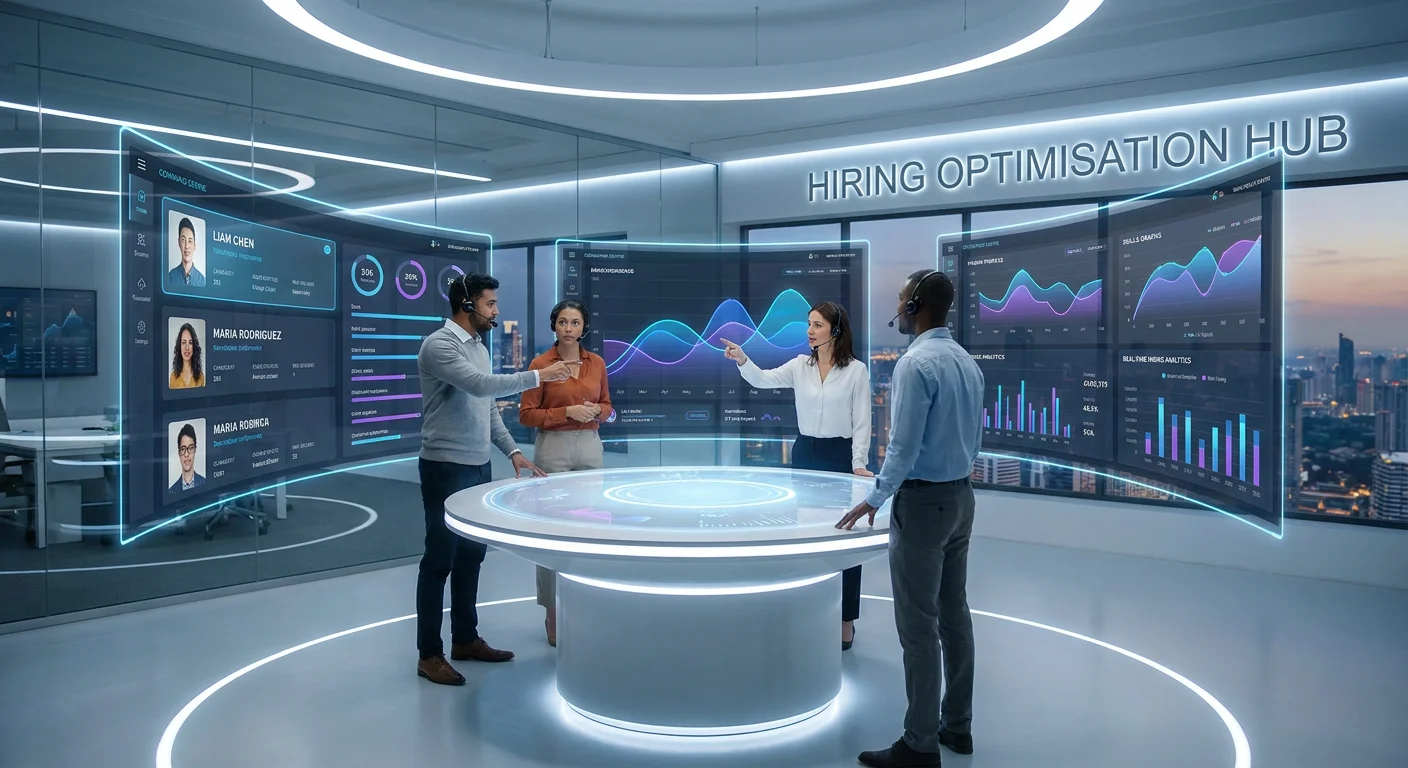
Master the art and science of talent acquisition. From finding top talent to deploying the latest HR solutions, this guide delivers actionable strategies that cut time-to‑fill and boost retention.
Modern Hiring at a Glance
Switch between tabs to explore the core pillars of an optimised recruitment process.
Strategic Talent Sourcing
Today’s best hire begins long before the job ad. Talent sourcing has evolved into a data‑driven discipline that blends AI‑powered search, niche job boards, and proactive talent pooling. Our Find Top Talent Faster resource outlines how to build a pipeline that’s 60% more efficient than reactive posting.
Utilise social listening, employee referral algorithms, and passive candidate engagement to continuously find talent even when you’re not actively hiring. This proactive approach reduces cost‑per‑hire by an average of 35%.
Precision Candidate Screening
Candidate screening is where great hires are made – or lost. Advanced tools now combine psychometric profiling, video interview AI, and skill‑based simulations to paint a complete picture of each applicant. Yet many organisations still commit common candidate screening mistakes that introduce bias and delay.
Learn how to blend automation with human intuition to create a best hire screening strategy for 2026 that is both fast and fair.
Flexible Staff Augmentation
Staff augmentation bridges skill gaps without the overhead of permanent hiring. Whether you need niche warehouse operatives – like our teams in Doncaster (DN4) or Rugby (CV21) – or specialised lab technicians, a flexible workforce keeps you agile.
Our workforce solutions give you on‑demand access to vetted professionals, enabling you to scale up or down within 48 hours.
Complete Recruitment Outsourcing
Recruitment outsourcing transfers the entire hiring lifecycle to expert partners, freeing your HR team to focus on retention and culture. Our UK staffing partner solution integrates seamlessly with your in‑house systems, offering everything from compliance checks to managed payroll.
This model is perfect for high‑volume roles – from Warehouse Operatives in Dartford (DA2) to event staff – ensuring quality never slips, even during peak seasons.
Why Optimisation Matters Now
Speed to Market
Optimised processes reduce time‑to‑fill by up to 50%. Leverage talent sourcing automation and pre‑vetted pools to onboard in days, not weeks.
Quality of Hire
Structured candidate screening and competency‑based assessments raise first‑year retention by 45%. Stop common screening mistakes before they happen.
Scalability
Staff augmentation and recruitment outsourcing let you scale teams instantly without sacrificing culture. Ideal for seasonal peaks or project‑based work.
The Engine of Optimised Hiring
Learning how to optimize hire employees isn’t about a single magic tool – it’s about re‑engineering every touchpoint. Below we break down the three critical streams that fuel a world‑class recruitment machine.
1. Talent Sourcing & Attraction
The first step in any hiring journey is to find talent where others aren’t looking. Traditional job boards capture less than 30% of the qualified workforce. Modern sourcing uses programmatic advertising, talent communities, and Boolean‑driven database mining to unearth passive candidates. By integrating our Find Top Talent Faster blueprint, you can build a sourcing framework that delivers a constant stream of pre‑qualified prospects.
Don’t overlook employer branding: 75% of job seekers consider an employer’s brand before even applying. Craft compelling employee value propositions that speak directly to the talent you need.
2. Candidate Screening & Selection Science
Rigorous candidate screening is your quality gate. Yet, rushing this phase leads to the common hire employees candidate screening mistakes to avoid, such as over‑relying on gut instinct, using unstructured interviews, or ignoring red‑flag patterns in job‑hopping. Structured interviews reduce bias by 40% and predict performance twice as accurately as unstructured ones.
To implement the best hire employees candidate screening strategies for 2026, you need a blend of asynchronous video interviews, job‑specific simulations, and collaborative scorecards. These strategies not only speed up the process but also ensure every candidate is measured against the same bar.
Adopting the right tech stack is essential – discover the top hire employees candidate screening tools below.
3. Flexible Workforce: Staff Augmentation & Outsourcing
Sometimes the best hire isn’t a permanent employee. Staff augmentation brings specialised skills onto your team for a defined period, ideal for digital transformation or seasonal rushes. Meanwhile, recruitment outsourcing hands the entire hiring lifecycle to a partner, complete with compliance, payroll, and onboarding. Explore our Workforce Solutions to see how these models have helped companies in logistics, hospitality, and manufacturing – from warehouse operatives in DA2 to skilled event technicians.
By blending permanent, augmented, and outsourced talent, you create a truly resilient workforce that can adapt to any market condition.
Screening Mastery: Tools, Mistakes & 2026 Forecast
Top Candidate Screening Tools
The market is flooded with software, but the top hire employees candidate screening tools share a common DNA: AI‑powered matching, bias mitigation, and seamless integration with your ATS. Leading platforms include:
- Skill‑Based Assessment Suites – Codility, HackerRank, or TestGorilla, which objectively measure hard skills.
- Asynchronous Video Interviewing – HireVue or Spark Hire, enabling candidates to record answers on their own time.
- Psychometric & Cognitive Evaluations – Pymetrics, Revelian, helping predict culture fit and learning agility.
- Reference Checking Automation – Zinc or Xref, cutting the time spent on manual checks by 80%.
- Background Screening Platforms – Onfido or Sterling, essential for high‑trust roles.
When evaluating tools, prioritise those that offer robust analytics dashboards – they let you track screening efficiency and identify bottlenecks in real time.
Common Candidate Screening Mistakes to Avoid
Even seasoned recruiters slip up. Here are the common hire employees candidate screening mistakes to avoid if you want a future‑proofed process:
- Over‑reliance on CV Keywords – A buzzword‑rich CV doesn’t equal competence. Always back‑check with practical skills tests.
- Ignoring Soft Skills – Technical prowess means nothing without communication and teamwork. Use situational judgement tests.
- Unconscious Bias in Interview Panels – Homogeneous panels can miss diverse talent. Mandate diverse interview teams and use structured rubrics.
- Skipping a Consistent Scorecard – Without a unified evaluation framework, scores become subjective.
- Failing to Sell the Role – Screening is a two‑way street. A poor candidate experience during screening can deter top performers.
Incorporate these lessons and pair them with the best hire employees candidate screening strategies for 2026 detailed above to build a hiring funnel that attracts and converts the right people.